What Is Data Engineering? From Raw Data to Data Analytics
Introduction
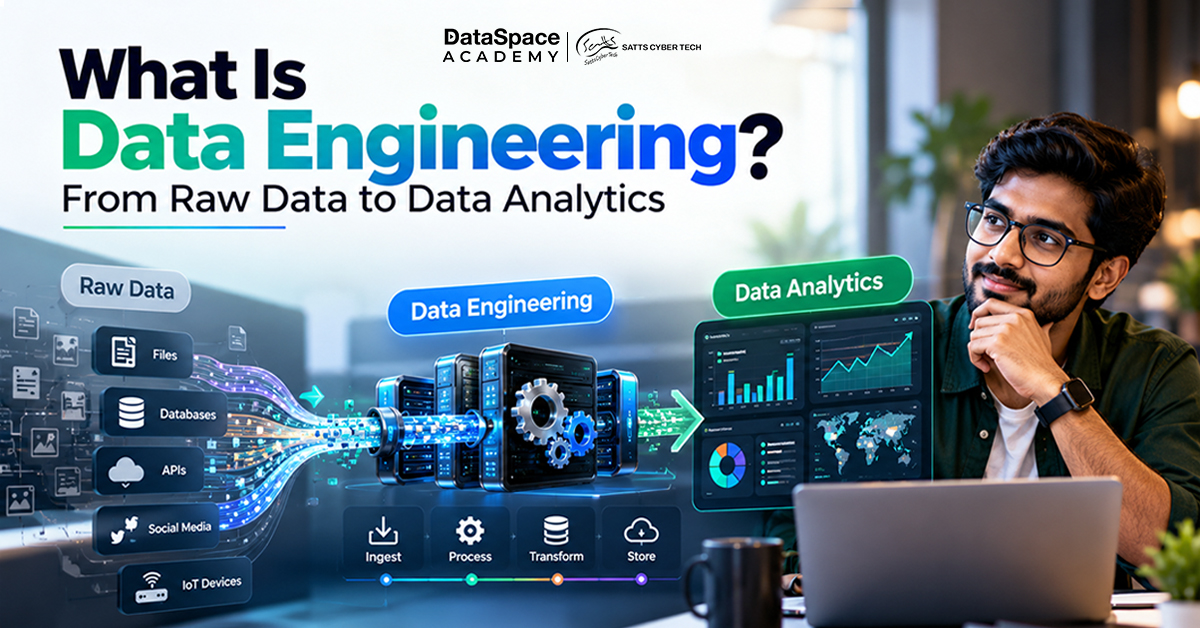
Every business generates data through customer transactions, website visits, applications and operations. However, collecting information is only the beginning. Organisations also need reliable systems to organize, process and deliver that information. This is where Data Engineering plays a significant role. It helps businesses turn raw data into useful resources for analytics, reporting and artificial intelligence. As companies depend on data-driven decisions, professionals who understand data systems and infrastructure can explore a range of career opportunities.
What Does Data Engineering Involve?
Data Engineering focuses on building and maintaining systems that move data from different sources into reliable format. Data Engineering focuses on building and maintaining systems that move data from different sources into accessible and reliable formats. For example, an online retailer may collect thousands of orders every day. A data engineer develops processes to collect, clean, store, and organise these records so the business can analyse sales trends and customer behaviour.
Data Engineering Skills to Develop
To work with data systems, aspiring professionals need a combination of technical knowledge and problem-solving skills. The skills include:
- SQL: Retrieve, organise, and manage information stored in databases.
- Python: Automate data processing and handle repetitive tasks.
- Database management: Understand how organisations store and access information.
- ETL and ELT: Learn how to extract, transform, and load data.
- Data pipelines: Build workflows that move information between systems.
- Cloud platforms: Understand services such as AWS, Microsoft Azure, and Google Cloud.
- Data modelling: Structure information so teams can use it efficiently.
How Can Beginners Start Learning Data Skills?
Starting with programming fundamentals, SQL and database creates a strong foundation. Next, learners can explore data pipelines and cloud infrastructure. Gradually, working with real data sets helps them understand how these components connect. However, not everyone who wants to enter the data industry needs to begin with a specialised data engineering role. Learning analytics can also provide a valuable entry point. A Data Analytics Course in Kolkata can help develop skills in Excel, SQL, Python, Power BI and AI. These capabilities prepare them to interpret business information and understand how well organized data supports business decisions. For learners seeking structured guidance, DataSpace Academy offers data analytics training with practical assignments and project-based learning. Building these foundations can help aspiring professionals strengthen their technical understanding before exploring more specialised data roles.
Conclusion
Data Engineering connects raw information with meaningful business insights. By learning SQL, Python, Excel, businesses can build relevant skills and explore opportunities across data infrastructure and analytics. DataSpace Academy provides a structured learning pathway for those looking to develop practical skills and prepare for future career opportunities.
Ready to take the next step explore the Data Analytics Course in Kolkata and begin your data career.
\
Comments
Join the discussionNo comments yet. Be the first to comment.